
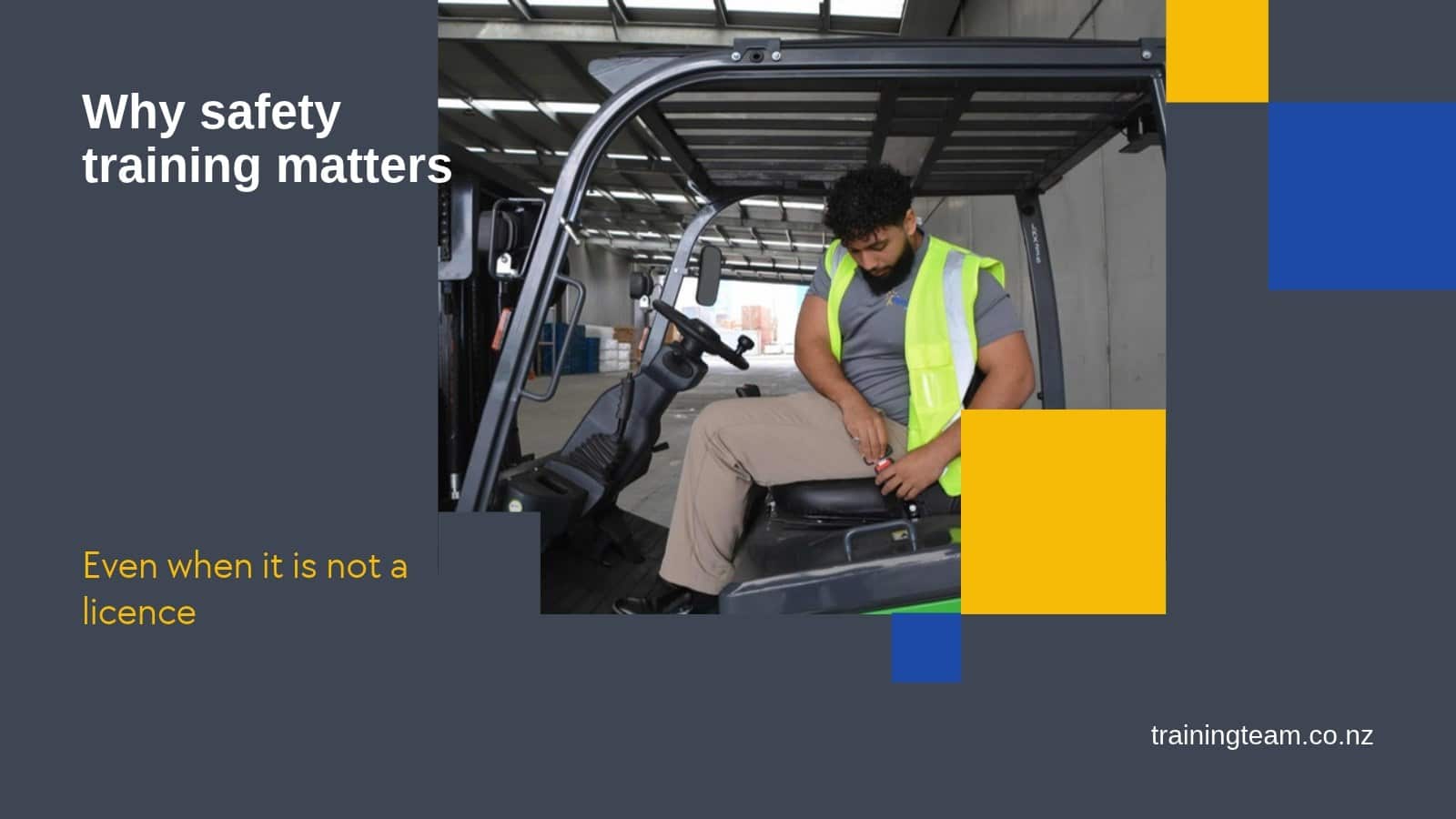
Some workplace courses lead to a licence or endorsement that legally lets you do a job, like driving a forklift on the road or carrying dangerous goods. Many others do not. A dangerous goods awareness course, manual handling training or a health and safety induction will not put anything on your driver licence. So why do employers bother?
Because in New Zealand, training is not just about licences. It is one of the main ways a business meets its health and safety duties, protects its people and shows it has done what it reasonably can if something goes wrong.
Your duty to train sits in the law, not in a licence
Under the Health and Safety at Work Act 2015, every business (a PCBU, or “person conducting a business or undertaking”) has a primary duty of care. Section 36 says this includes providing, so far as is reasonably practicable, any information, training, instruction or supervision needed to protect people from work-related risks.
The Health and Safety at Work (General Risk and Workplace Management) Regulations 2016 add more detail. WorkSafe’s guidance says businesses must make sure that the training, information, instruction and supervision they provide is suitable and adequate, and that workers are adequately trained in the safe use of the plant, substances and equipment they work with.
Notice what that duty does not say. It does not say “only train people when a licence is required”. It applies to the risks in your workplace, whether or not a certificate comes with the training.
WorkSafe also makes the point that training should be tailored and fit for purpose, not a tick-box exercise. A short course that matches the real risks your team faces is worth more than a generic one.
What is at stake for employers
When a business fails to meet its duties, the penalties under the Act are significant. The maximum fines for a business are:
| Offence | Business (body corporate) | Officer or individual PCBU |
|---|---|---|
| Failing to comply with a duty | $500,000 | $100,000 |
| Failing to comply with a duty, exposing someone to risk of death or serious injury or illness | $1.5 million | $300,000 |
| Reckless conduct | $3 million | $600,000 and/or up to 5 years’ imprisonment |
Directors and senior managers are “officers” under the Act and have their own duty of due diligence, so the responsibility does not stop at the business.
You cannot insure against the fines
This is the part many employers do not realise. Section 29 of the Act makes it unlawful to insure against a fine or infringement fee under the Act. Any policy that claims to cover them has no effect.
Statutory liability insurance can still cover things like legal defence costs and reparation, but the fine itself is yours to pay. That makes prevention the only real protection, and training is a big part of prevention.
How training helps protect your business
No course removes your legal duties, and training will not make a business immune from prosecution. But it does help in some very practical ways:
- Fewer incidents in the first place. People who understand the hazards around them make better decisions. That means fewer injuries, spills, near misses and damaged stock.
- Evidence you took reasonable steps. If something does go wrong, one of the first questions is what training and supervision the worker had. A course certificate with a date on it is a clear record. WorkSafe notes that training records are not mandatory but are useful for showing what training has taken place and when refreshers are due.
- A better position with insurers. Fewer incidents means fewer claims. A strong safety record and documented training can help when you are reviewing or renewing your cover, so it is worth mentioning to your broker.
- Less downtime. Every injury means time off, cover shifts, paperwork and lost productivity, on top of the human cost.
- Winning work. Many clients and tenders ask suppliers for evidence of health and safety training before awarding a contract.
- A team that feels looked after. Staff notice when an employer invests in keeping them safe, and that helps with retention and culture.
Where awareness training fits
Awareness courses are not a replacement for a licence where one is legally required. A D endorsement is still needed to carry dangerous goods for reward on the road, and an F endorsement is still needed to drive a forklift on the road.
What awareness training does is cover everyone else: the people who work near the hazard, handle the paperwork, store the goods or supervise the team. They may never need a licence, but they still need to know the risks. Good examples:
- Dangerous Goods Awareness (Online): 60 to 90 minutes, self-paced, with a certificate valid for 3 years. Ideal for inductions, refreshing knowledge and staff who work around dangerous goods. It is a lighter alternative to DG Warehouse and Handling and not as comprehensive.
- Dangerous Goods Warehouse and Handling: a full day, face to face, for staff who store, pack and handle dangerous goods and prepare DG paperwork and declarations.
- Manual handling training: delivered onsite and built around the lifting, carrying and repetitive tasks your team actually does.
- Health and Safety Level 1: a half-day introduction to workplace health and safety for any worker.
Training new starters without booking a course every time
If you have regular new starters or high staff turnover, keeping everyone trained can be hard. We also build bespoke e-learning for businesses, covering dangerous goods (built around the classes your team actually handles), manual handling and health and safety. New staff can complete it as part of their induction, and you get a consistent record for every person. Get in touch to talk about what your team needs.
Frequently asked questions
Do employers have to provide health and safety training in NZ?
Yes. Under section 36 of the Health and Safety at Work Act 2015, businesses must provide, so far as is reasonably practicable, the information, training, instruction or supervision needed to protect people from work-related risks.
Is a course worth it if it does not give a licence?
Yes. Many workplace risks are not covered by any licence. Awareness and induction training helps workers understand the hazards around them, reduces incidents and gives you a record of the training you have provided.
Can a business insure against WorkSafe fines?
No. Section 29 of the Health and Safety at Work Act 2015 makes it unlawful to insure against a fine or infringement fee under the Act. Insurance may cover legal defence costs and reparation, but not the fine.
Do I have to keep training records?
WorkSafe says training records are not mandatory, but they are useful to show what training has taken place and when refresher training is due.
Talk to us about your team
Not sure what training your team needs? Call us on 0800 692 244 or request an onsite quote and we will help you work out the right mix.
Sources
- Health and Safety at Work Act 2015, section 36: Primary duty of care
- Health and Safety at Work Act 2015, section 29: Insurance against fines unlawful
- WorkSafe: Providing information, training, instruction or supervision for workers
- WorkSafe: Offences and penalties under the Health and Safety at Work Act 2015
- Vero Liability: Statutory liability insurance
This article is general information, not legal advice. For advice on your specific obligations, talk to a health and safety professional or lawyer.